
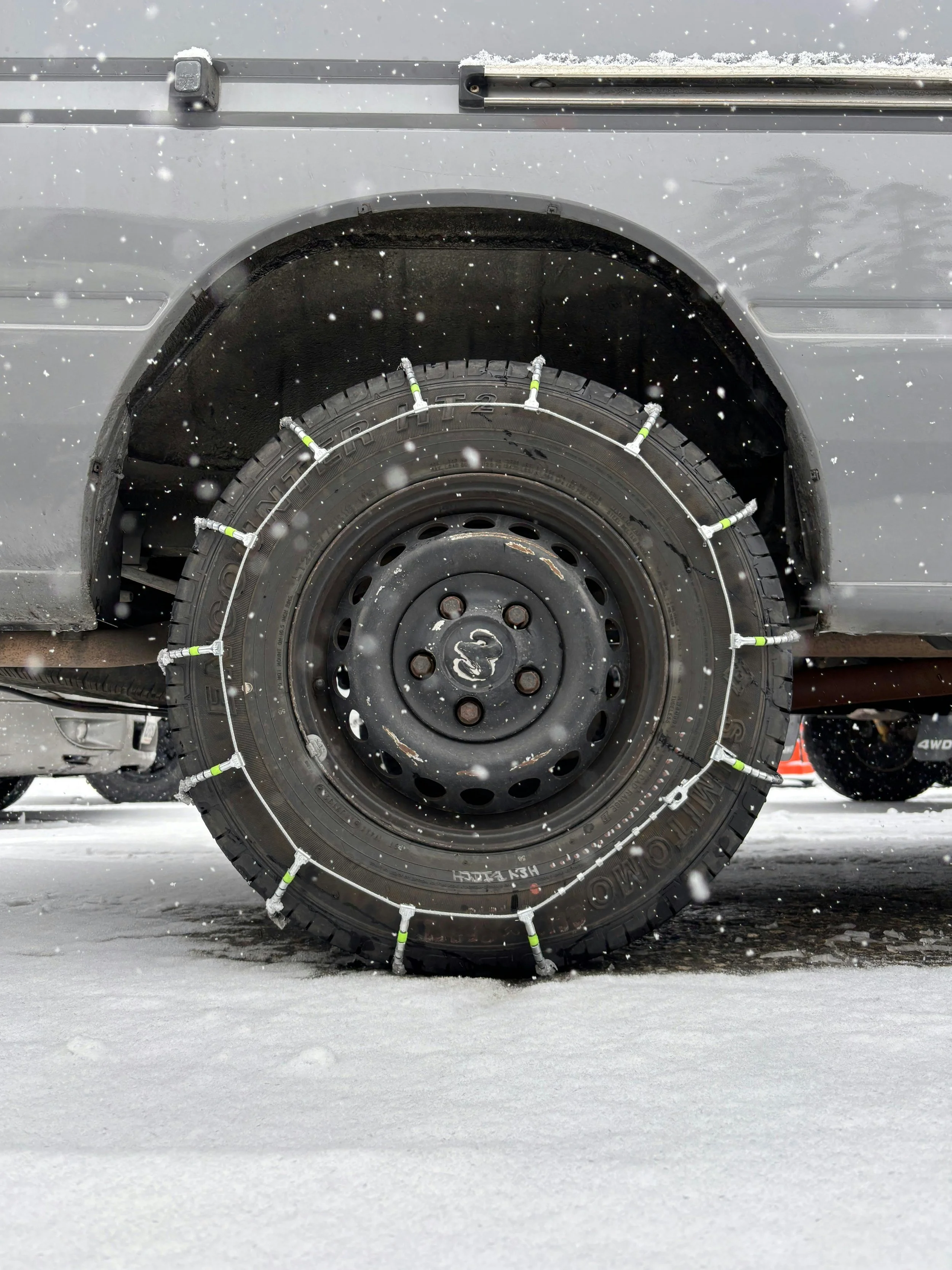
Driving during the winter in Rochester, NY, can be treacherous. Snow-covered roads with an added layer of ice, plus poor visibility during snowstorms, make operating a vehicle nerve-wracking for most drivers. The best way to get a grip? Equip your vehicle with snow chains, winter tires, and other weather-appropriate traction solutions for improved safety and handling.
Snow chains can enhance traction when conditions turn severe, but they’re not always the right solution. In this guide, our tire experts break down:
What are snow tire chains
When snow chains make sense
How to choose the right set of tire chains
How to avoid costly mistakes that can damage your tires or vehicle
Related: Before you invest in snow chains, see if all-weather tires are the better fit for your driving needs.
What Are Snow Tire Chains?
Snow tire chains are traction devices that fit over your tires to improve grip on roads covered with snow and black ice. They use metal links or reinforced cables to dig into packed snow and ice. This helps your tires maintain control when standard tread won’t cut it.
Tire chains are most effective in severe winter conditions where snow accumulation is heavy (hello, Rochester in January!) and road treatment is limited. While they can prevent accidents in extreme situations, they are designed for temporary use and should not replace actual winter tires for everyday driving.
Snow Chains vs. Studded Tires vs. Snow Tires
Choosing between snow chains, studded tires, and snow tires depends on where, how, and how often you drive in winter conditions. They all have their advantages and disadvantages, and you can find which one (or two) works best for your situation.
The basic differences are:
Snow chains provide short-term traction in extreme conditions. Think declared snow emergencies.
Studded tires improve grip on ice but are restricted in many states, like Florida and Michigan; some states, like New York, allow them seasonally.
Snow tires deliver better handling, stability, and braking without the limitations of snow chains, which is especially helpful for city driving and navigating moderate winters. These are typically recommended for those driving in Rochester or New York City!
When Should You Use Tire Chains?
Tire chains are best reserved for challenging situations where safety is at risk and traction is limited. Our tire experts suggest using snow chains when you are:
Stuck in deep snow and need extra tire traction to regain movement
Driving on roads with ample snow coverage and minimal plowing
Navigating lake-effect snow conditions with rapid accumulation
Commuting through mountainous or steep terrain, like the Adirondack mountains
Traveling to remote locations or going camping in winter conditions
Passing through areas experiencing severe winter weather
In these cases, snow chains can improve vehicle performance and help prevent accidents when used correctly.
How to Choose the Right Snow Chain
When buying tire chains, there are a few things to keep in mind so you can get the right ones for your vehicle.
Check your tire size: First, always start with your tire size, which is printed on the sidewall of your tire. Snow chains must match this size exactly for the correct fit and optimal performance.
Confirm vehicle clearance requirements: Some vehicles have limited clearance between the tire and wheel well. Before purchasing tire chains, check how much space your vehicle has.
Identify your vehicle’s drive type: Your vehicle’s drive type will determine where snow chains should be installed. For example, front-wheel drive vehicles typically require chains on the front tires, rear-wheel drive vehicles on the rear tires, and all-wheel drive vehicles may have specific manufacturer recommendations.
Choose the right type of snow chain: Traditional link chains provide strong traction for extreme conditions. Then there are cable chains, which are lighter and better for vehicles with limited clearance. Tire socks are also an option and work well for occasional use in moderate snow.
Check local and state regulations: Snow chain requirements vary by location and weather conditions. We’ll explain this more later in this guide!
Plan for safe installation and use: Practice installing your chains before harsh winter conditions hit. Correct installation improves safety, protects your tires, and helps maintain better handling and braking performance on snow-covered roads.
Snow Chain Mistakes to Avoid
Using snow chains incorrectly can reduce your performance, damage your vehicle, or even cost you some hefty fines. We recommend avoiding installing chains when roads are clear or only lightly covered. Using snow chains when they’re not necessary can damage tires, suspension components, and road surface. Remember to remove snow chains as soon as conditions improve!
Another snow chain mistake to avoid is any action that would violate state or local laws. For example, in New York, requirements can differ by region, route, and vehicle type. There is a state law in New York that requires vehicles to use snow tires or chains during declared snow emergencies on specific routes. This particular law is enforced by fines and tow charges, so you want to make sure that you know your local laws on those harsh winter days.
FAQs About Snow Chains
1. Do you put chains on all four tires for snow?
In most cases, you install snow chains on the drive tires only. Some vehicles with all-wheel drive or specific handling requirements may benefit from chains on all four tires, but you should always check your owner’s manual first.
2. Where can I buy snow tires?
You can buy snow tires at Hooper’s Tire Outlet, of course! Check out our online inventory of new and used snow tires and all-season tires. Or just stop by one of our locations and talk with one of our tire experts to help you choose tires that fit your vehicle and driving needs.
3. When should you not use snow chains?
You should not use snow chains on dry pavement or lightly snow-covered roads. Doing so can damage your tires and the road, reduce handling, and increase wear on your vehicle. For these situations, your winter tires will do just fine!
4. Do I Need Snow Chains for Rochester, NY?
As Rochester winters have settled down, most drivers prefer all-weather tires or winter tires for snow. But those who travel throughout Western and Central New York may benefit from snow chains, especially when facing lake-effect snow or mountainous terrain through the Adirondack and Catskill Mountains.
Learn About Snow Chains and Winter Driving Safety with Hooper’s Tire Outlet
Snow chains can improve traction and prevent accidents when winter conditions become severe. But our tire experts know they work best when you use them correctly with the right tires. By assessing your driving conditions, maintaining proper installation, and prioritizing safety, you can improve handling and protect your vehicle and yourself throughout winter.
Not sure if snow chains, winter tires, or all-weather tires are the right fit for your vehicle? Visit Hooper’s Tire Outlet in Rochester or Syracuse, NY, to explore high-quality tire options and get expert guidance tailored to your winter driving needs.