
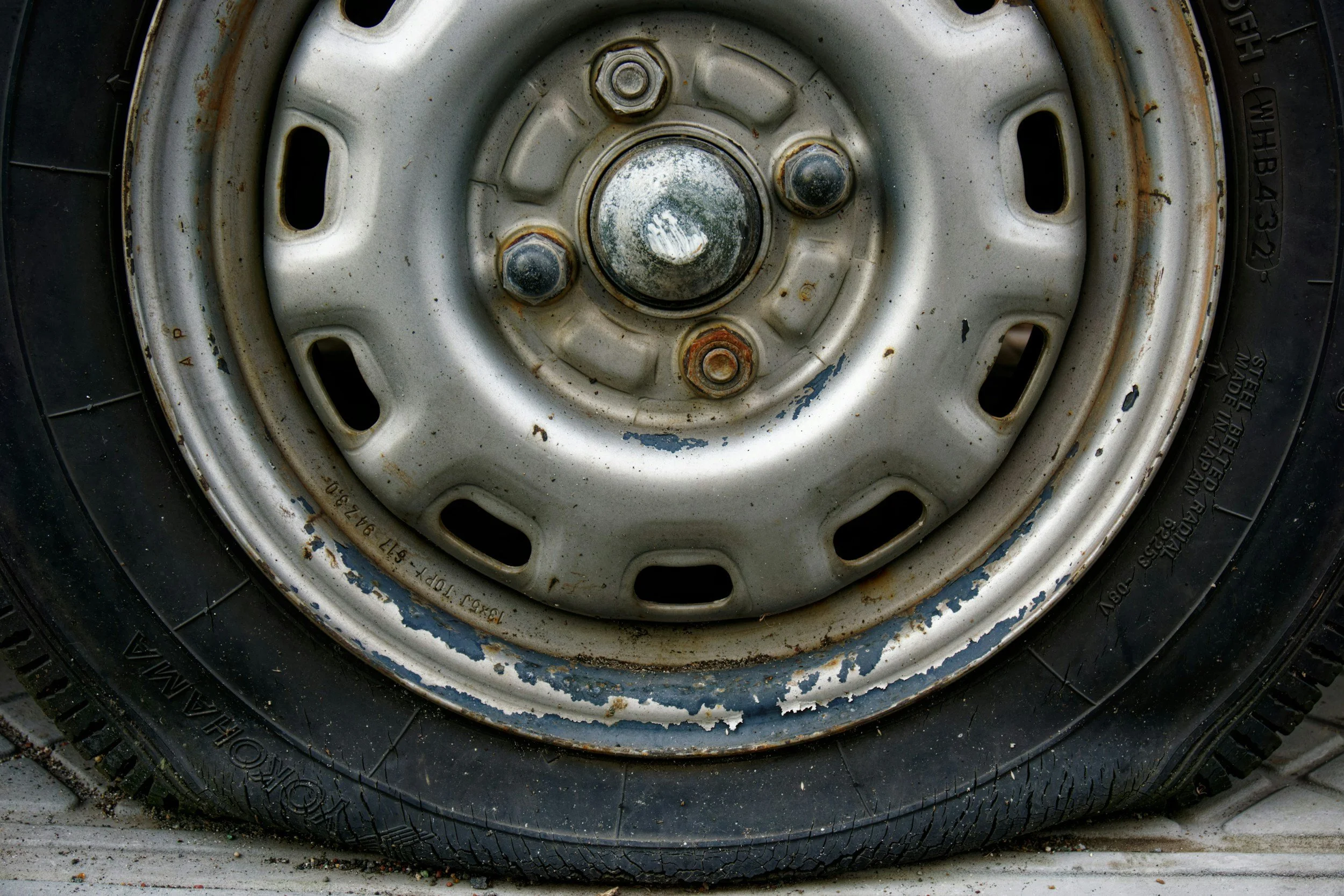
Have you ever stepped outside of your house, looked at one of your tires, and thought, “That seems a little low…but it’s probably fine”?
Low tire pressure may not seem urgent. But the truth is that driving with underinflated tires can quietly reduce safety, comfort, and overall vehicle performance. In most cases, catching low tire pressure early is simple and easily fixable.
Our experts at Hooper’s Tire Outlet explain what low tire pressure means, what triggers it, and the dangers that come with it.
Not sure if your tires are up to speed? Schedule a professional tire inspection at Hooper’s Tire Outlet to ensure they are safe and road-ready.
What’s the Ideal Tire Pressure?
Tire pressure refers to the amount of air inside your tires that supports your vehicle’s weight and keeps the tire properly shaped for safe driving. It’s measured in PSI, which stands for pounds per square inch. PSI tells you how much force the air inside the tire is applying to the inner walls of the tire.
The ideal tire pressure depends on your vehicle, tire type, and driving conditions. Automakers design each system with specific PSI guidelines listed in your car manual and on the sticker inside your driver’s door.
For most passenger vehicles, the recommended pressure falls between 30 and 35 PSI.
Several factors affect tire pressure:
Air temperature
Load weight
Highway vs. city driving
Tire size and construction
Seasonal changes
Cold air causes pressure to drop. Warm air increases it. Even normal air loss over time can reduce PSI. That’s why it is important to assess your tires regularly and maintain the recommended level.
What’s the Right Tire Pressure for Winter?
You may notice your tires look slightly lower in the morning during the winter in New York. As you drive, friction warms them up and increases pressure slightly.
To know the right tire pressure for winter, start within your manufacturer’s recommended 30 to 35 PSI range, unless your car manual provides specific instructions. It’s best to avoid inflating based on guesswork.
For drivers in snow regions, we recommend comparing all-weather tires with dedicated snow tires. Tires that are designed specifically for snowy conditions have benefits like enhanced traction and improved handling on icy roads.
What Tire Pressure Is Too Low?
We all know that no one immediately pulls over when the dashboard Tire Pressure Monitoring System (TPMS) light comes on. But how low is too low when it comes to tire pressure?
If your tires fall 5 to 10 PSI below the recommended level, you may notice reduced performance. Below 20 PSI, tire underinflation becomes a serious safety issue.
Common warning signs include:
Visible sidewall sagging
Sluggish steering
Reduced fuel efficiency
Uneven tread wear
A rough, restrictive ride
6 Dangers of Driving on Underinflated Tires
While driving on underinflated tires can lead to a rough ride, it’s actually also compromising your safety and your vehicle’s critical performance traits.
Here are some dangers that happen when tire underinflation goes unchecked.
1. Deform Your Sidewall Over Time
Underinflated tires flex more than designed. That flexing causes the sidewall to bulge outward and deform with use.
When you continue driving with low tire pressure:
Internal air temperature increases
Tire components experience additional stress
The shoulders of the tire wear faster
Tread life shortens
Deformed sidewalls are weakened sidewalls, which are more likely to rupture and possibly cause accidents.
2. Trigger a Dangerous Blowout
Driving with low tire pressure builds heat inside the tire. That heat weakens the bond between rubber and steel belts, which reinforce the tread and maintain the tire’s structure.
At highway speeds, this internal damage can trigger sudden tire failure, which is typically a blowout. This often starts with a loud pop and is followed by an immediate loss of control. One moment you’re cruising down the highway, and the next, you’re managing a serious safety issue and are possibly left having to change a tire by yourself.
3. Reduced Handling, Especially in Wet or Snowy New York Conditions
Another danger of underinflated tires is the reduction in handling on roads. Tires with low pressure struggle to maintain proper shape against the pavement. This reduces traction and compromises stability. Drivers may notice:
Slower steering response
Increased hydroplaning risk
Less grip on snow and black ice
Reduced overall control
4. Extend Stopping Distances
When driving on underinflated tires, you usually need to allow for longer stopping distances. This is because low tire pressure changes the tire’s shape and reduces its ability to maintain consistent contact with the road surface.
As the tire flexes more than it should, energy that would normally help with braking is absorbed through heat and deformation instead of gripping the pavement. Even if you react quickly and are using the best tire brands, underinflated tires cannot grip the road effectively. This reduces braking performance and increases the chance of collisions, especially in heavy traffic or winter weather.
5. Increase Fuel Costs Over Time
Low tire pressure increases rolling resistance, which is the extra force your engine must overcome to keep the tires moving forward. Underinflated tires flatten and create more surface drag against the road, making your vehicle work harder and burn more fuel.
Assuming average 2025 New York gas prices and one hour of total driving daily, reduced fuel efficiency from underinflation could end up costing you a pretty penny. Here’s the breakdown:
Daily: $0.75 to $1.25
Weekly: $5 to $9
Monthly: $20 to $35
Yearly: $240 to $420
Over time, that adds up quickly!
6. Accelerate Tire Replacement Cycles
Underinflated tires age faster than correctly inflated ones because low pressure shifts more load to the tire shoulders. This accelerates tread wear and weakens internal components. The result is premature wear, reduced performance, and drivers often replacing their tires months earlier than expected.
Under normal conditions, most quality tires last between 40,000 and 60,000 miles, depending on the vehicle and driving habits. However, with consistent tire underinflation, that lifespan can drop significantly, sometimes cutting usable tread life by 10,000 miles or more. That means replacing tires one or two years sooner than planned.
Maintain Your Tire Pressure With Hooper’s Tire Outlet
Low tire pressure affects safety, comfort, and critical performance traits for your vehicle. The good news is that it’s easy to correct when caught early.
At Hooper’s Tire Outlet, our experts can help you assess your current tire situation and provide guidance for maintaining correct inflation levels. We also offer quality used and new tires at a discounted price. Stop by one of our Hooper’s Tire Outlet locations for expert service, or browse our national eBay store for dependable tires shipped straight to your door.