
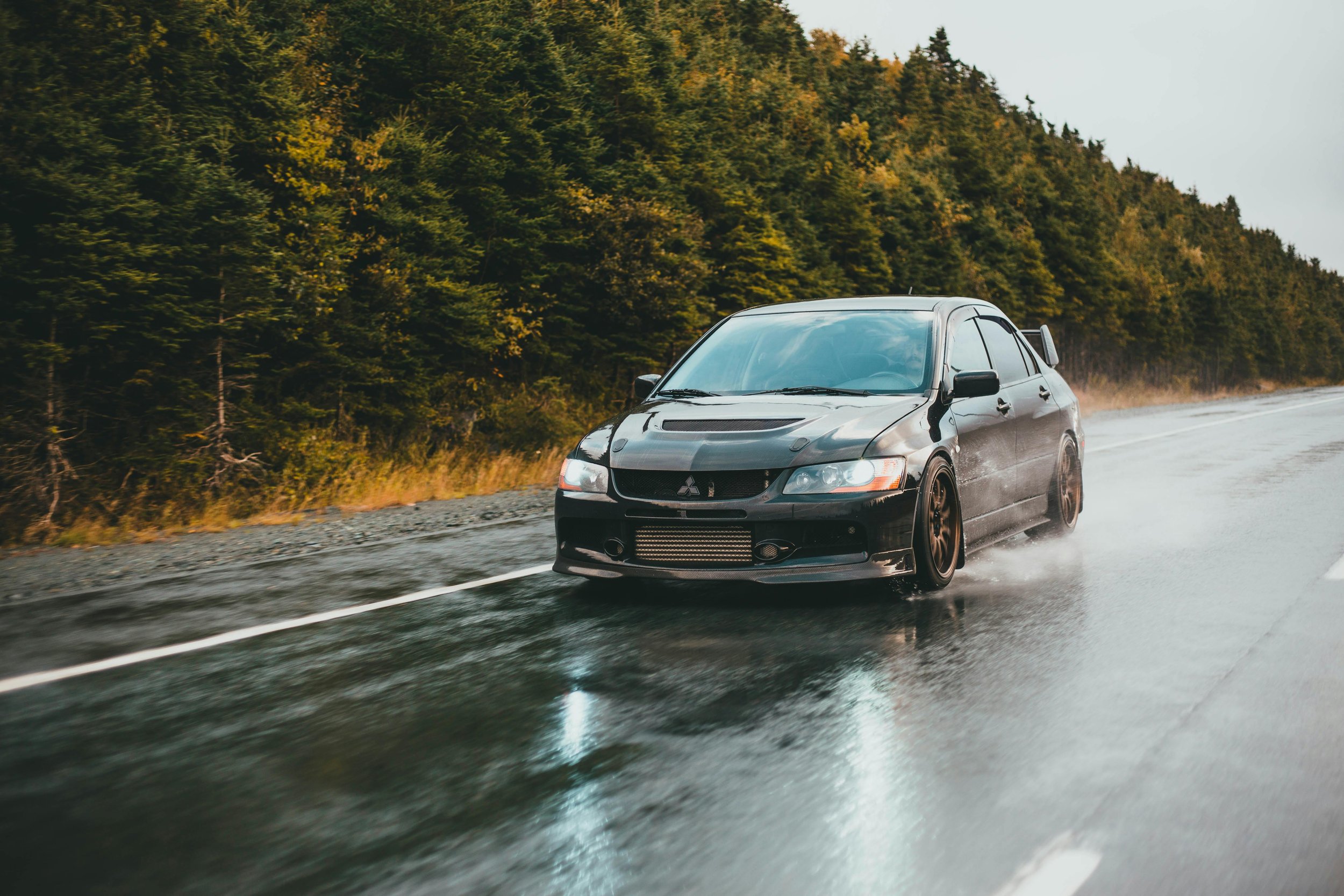
Heavy rains can turn a normal drive into a stressful situation in seconds. One moment you are cruising, and the next, your steering feels loose, and your tires seem to slide instead of grip. Now what?
Understanding what to do when hydroplaning can help you regain control of your vehicle and reduce the risk of an accident. In this article, we’ll explain what hydroplaning is, how to avoid it, and the step-by-step actions you should take if your vehicle begins to slide on wet roads.
If your tires are worn or struggling to perform in wet conditions, our tire experts at Hooper’s Tire Outlet can help! Explore our Rochester-based tires or browse our national online tire inventory to find affordable tire options that can be shipped to your door.
What Is Hydroplaning?
Hydroplaning, also known as aquaplaning, is a loss of traction that occurs when your tires ride on top of a layer of water instead of maintaining contact with the road. As your tires spin on wet pavement, some water channels safely through the tire treads while some gets pushed in front of the tire. The water in front of the tire has nowhere to go, which can cause it to form a liquid wedge between your tires and the road. This makes it harder to steer, brake, and stay in control of your vehicle effectively.
Hydroplaning is especially common during specific situations that happen in Rochester and Syracuse, New York. It often occurs during heavy rainstorms, sudden summer downpours, and spring snowmelt when water collects in potholes or poorly drained roadways. In the first few minutes of rainfall, a mix of water, engine oil, and road dust can create an extremely slippery surface before steady rain has time to wash those residues away.
What Causes Hydroplaning?
Besides heavy rain, hydroplaning can occur due to several factors that reduce your tires’ ability to maintain traction on wet roads, including:
Driving speed
Worn or underinflated tires
Low tread depth on tires
Sudden braking or steering inputs
Vehicle weight and tire design
What Does Hydroplaning Feel Like?
Many drivers describe hydroplaning as feeling like their vehicle is floating. Steering may suddenly feel loose, and the engine may rev higher as the tires lose grip. In smaller cars, especially, the suspension and steering can become noticeably lighter, as if the tires are no longer firmly connected to the road. The steering wheel may feel loose or vague in your hands, with less resistance when you try to guide the vehicle.
Some compare the sensation to gliding across water like a wakeboard rather than driving on pavement. This floating momentum usually lasts only a few seconds, which means drivers may not immediately realize how much control has been reduced until traction begins to return. But this loss of feedback from the road is a major safety issue and requires calm, controlled action.
What to Do When Hydroplaning (Step by Step)
Hydroplaning can feel frightening and happen without warning, so it helps to remember a simple plan. We teach the acronym E.A.S.E., which stands for:
Ease off the gas and stay calm
Avoid sudden braking
Steer gently
Expect traction to return
Even if your vehicle begins to slide, there is often still time to recover and stabilize the situation before it escalates.
Step #1: Ease Off the Gas and Stay Calm
Many drivers panic when their car begins to hydroplane, which is completely understandable but highly dangerous. Panicking can lead to sudden movements that make the loss of traction worse.
Instead, ease off the accelerator, which helps reduce speed and gives your tires a better chance to reconnect with the road surface. Note: this does not mean take your foot off the accelerator suddenly.
Staying calm and keeping your movements smooth can prevent overcorrection. This controlled response improves your chances of safely stabilizing the vehicle and regaining traction.
Step #2: Avoid Sudden Braking
When you slam on the brakes during a hydroplane, you can accidentally cause your brakes to lock and trigger a phenomenon called reverted rubber hydroplaning. That’s when the friction caused from fast braking evaporates the water between your tire and the road, creating a pocket of steam trapped under your tire that prolongs skidding.
To avoid this:
Do not slam on the brakes.
Allow the vehicle to slow naturally.
If braking is necessary, apply gentle pressure.
Trust modern braking systems, like your ABS.
Remember that smooth braking helps maintain balance and prevents further loss of traction.
Step #3: Steer Gently
During hydroplaning, it is critical to keep a steady grip on the wheel because sudden corrections can cause the vehicle to spin or drift further out of your lane. Instead, point the wheel in the direction you want the front of the car to go.
For example, if you are on a back road with a forest to your right and the opposite lane to your left, focus on guiding the vehicle straight ahead in your lane rather than jerking the wheel toward one side. No sharp movements. Just smooth controlled steering until traction returns.
Step #4: Expect Traction to Return
Hydroplaning is temporary, so you should expect traction to return. As your tires begin to reconnect with the road, you will feel resistance come back through the steering wheel. This feedback is a sign that control is improving. Keeping the wheel steady during this moment helps reduce the likelihood of overcorrection and lowers your risk of a collision.
Collect Yourself and Assess the Situation
Losing control of a vehicle is understandably scary, so after you’ve let the vehicle slow down and regain control, consider pulling over when it is safe to do so. Take a deep breath and a few minutes to collect yourself. Then assess the situation.
Hydroplaning can signal deeper performance issues, such as worn tread or low tire pressure. If you’re in a safe area, which is typically a place where you can pull over without risking your safety or disrupting traffic, such as a wide shoulder, parking lot, or quiet side street, then take some time to assess your tires visually.
Look for common tire problems, like uneven wear, shallow grooves, or visible damage. If anything seems concerning, seeking professional guidance is a smart next step. At the end of the day, maintaining optimal tire condition ultimately protects your safety and comfort on the road.
How to Avoid Hydroplaning
Hydroplaning risk can be reduced with smart driving habits and proper tire maintenance. Here are some tips to avoid hydroplaning.
Drive Defensively
Driving defensively means staying alert, anticipating potential hazards, and adjusting your speed and spacing to reduce the risk of accidents. Even a bit of extra space between your car and the next can give you invaluable time to react in case of an emergency.
Smooth acceleration and gradual steering inputs help maintain traction and keep you in control of your vehicle. Using defensive driving as a tactic to prevent hydroplaning helps prevent accidents when road conditions suddenly change.
Avoid Using Cruise Control to Avoid Hydroplaning
While cruise control can be helpful in certain driving situations, it’s not ideal for wet conditions. When your vehicle hits standing water or a deep puddle, it naturally slows down as traction decreases. Cruise control may then add power to return to the set speed, which can make it harder to regain grip and react smoothly to changing road conditions.
Turning off cruise control during rainy or wet conditions puts you in control of your safety. It allows you to assess traction levels and adjust speed as needed.
Maintain Your Tires Properly
It’s always a good idea to maintain your tires, especially when facing suboptimal driving conditions. Proper tire care can improve your vehicle’s performance on wet roads and keep you safe.
Some ways to stay on top of your tires include:
Maintaining correct tire pressure based on your vehicle manufacturer’s manual, which is typically between 30 and 35 PSI
Comparing tire condition regularly for uneven wear
Rotating tires according to professional recommendations, usually around every 5,000 to 7,500 miles
Scheduling inspections to detect performance issues early
Avoid Reckless Driving Habits
In addition to always maintaining your tires, it’s always best practice to avoid reckless driving habits, regardless of the road conditions. But when pavement is wet, aggressive acceleration, hard braking, and sharp turns can trigger hydroplaning more easily.
These bad habits can also impact tire wear by creating uneven tread patterns, increasing heat buildup, and putting extra stress on the tire shoulders, which reduces traction and overall performance. That’s why it’s recommended to use smooth, controlled driving habits at all times.
Check Tread Depth Regularly
A quick and regular check of the depth of the treads on your tires can help prevent hydroplaning situations. Tread depth plays a critical role in channeling water away from your tires. Tires should be replaced when tread depth reaches 2/32 of an inch, though many safety experts recommend replacing them at 4/32 of an inch for better wet-road traction.
When the tread becomes shallow, water cannot escape efficiently, increasing hydroplane risk. It’s your responsibility as a vehicle owner to assess tread depth frequently, especially before rainy seasons, to maintain safe vehicle performance.
Find Used Tires for Wet Roads
Hydroplaning can compromise control, confidence, and vehicle performance. The good news is that regular tire maintenance and responsible replacement can significantly reduce your risk of losing control on wet roads.
At Hooper’s Tire Outlet, our tire experts help you compare affordable used and new tire options designed to improve your vehicle’s traction in wet conditions. Stop by one of our locations in Rochester or Syracuse for reliable service, or explore our online tire inventory to find dependable tires for your vehicle.